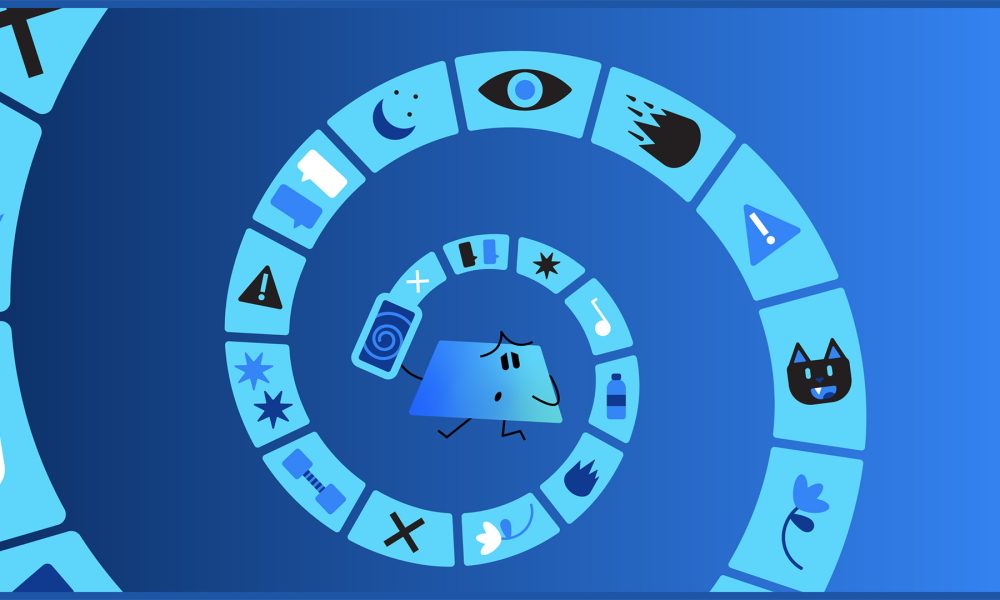
You’re almost afraid to check the clock. You’ve been lying here since 9 p.m., waiting for your mind to shut off. You’ve got a big day tomorrow, so you went out of your way to get to bed early — but the more you try to sleep, the faster your thoughts go. It’s like someone got ahold of a radio dial in your brain and won’t stop spinning it, flipping endlessly through stations. These racing thoughts make the night feel even longer and sleep seem impossible.
In this entry you will learn . .
Tentatively, you check the time on your phone and 2:00 a.m. glares up at you from the screen.
Your alarm is set to go off in four hours, there’s no way you’re getting enough sleep now.
As you groan and collapse back into your pillows, you wonder: Why does my mind race at 2 a.m. — and what can I do about it?
Insomnia Defined
The American Psychological Association defines insomnia as “the persistent difficulty initiating or maintaining sleep, which can lead to day time fatigue and impairment in functioning.” Insomnia isn’t just the occasional restless night — it’s a recurring pattern that can impact your mental, emotional, and physical well-being.

While insomnia can sometimes point to a deeper mental health issue, it’s just as often triggered by everyday factors: a stressful life situation, too much caffeine too late in the day, or even binging the latest true crime documentary before bed.
What Are Racing Thoughts?
Racing thoughts are fast-moving, often disjointed ideas that jump from topic to topic.
They might start with something small — Did I remember to turn off my work computer?
Then, before you know it, you’re replaying an awkward comment from a meeting three weeks ago.
You start worrying you sounded unprofessional. Then you convince yourself your boss is going to bring it up in your next performance review…
and suddenly, you’re scrolling LinkedIn at 2:45 a.m., trying to figure out how to rewrite your résumé for the impending job hunt.
Nighttime restlessness might begin with a valid concern, but all too often turns into an internal showing of “The Worst Case Scenario.”
How Do Racing Thoughts Affect the Body?
At night, the prefrontal cortex — essentially the responsible adult in your brain — becomes less active. That means your ability to rationally evaluate thoughts takes a backseat, while the more reactive, emotional parts of your brain take the wheel.
No wonder everything suddenly feels like it’s moving at 10,000 miles an hour.
Without that internal regulator, your racing thoughts start to affect more than just your mind.
It’s like a siren going off inside you — your body shifts into defense mode, preparing to respond to what it thinks is danger. Your heart rate increases, your muscles tense, and stress hormones like cortisol surge through your system.
Cortisol, in turn, interferes with the production of melatonin — the hormone that regulates your circadian rhythm. Over time, that hormonal imbalance can throw off your internal clock, making it even harder to fall and stay asleep.
Why Does My Mind Race at Night?
Just like a child or a pet might get demanding when they haven’t had enough attention during the day, your mind can treat bedtime as its big chance. Finally free from distraction, it brings up unresolved stress, unfinished to-do lists, or anxious “what ifs” that didn’t get airtime earlier.
There are also biological and evolutionary reasons why nighttime restlessness feels more intense — and harder to rein in. Back when our ancestors had to watch for predators in the dark, being alert at night meant survival. That vigilance still lingers in our nervous systems, even though the threats we face now are more likely to be calendar reminders than claws.
Have you ever had something feel catastrophic at 2 a.m., only to realize the next morning it was barely a nuisance? Now you know why.
Sometimes insomnia is linked to an underlying mental health condition like anxiety, depression, or ADHD. If sleeplessness is a regular issue that’s affecting your quality of life, it’s always a good idea to consult with a mental health professional.
Mental fitness can be a powerful tool — helping you understand your emotions, shift your thought patterns, and build healthier habits. It can support other mental health treatments, but it’s not a replacement for professional care or any plan your provider recommends.
Common Triggers for Racing Thoughts at Night
Understanding what triggers your mind to race at night can help you make adjustments — either to your bedtime routine or to the way you process stress during the day.
Taking time to reflect, especially after emotionally charged days, and offering yourself compassion during difficult seasons can help ground mental spirals before they gain momentum.
Some of the most common triggers include:
- Work, relationship, or financial stress
- Major life transitions
- Grief or loss
- An overstimulating sleep environment (light, noise, temperature)
- Excessive screen time before bed
- Hormonal or medical factors
How to Calm a Racing Mind at Night
A bedtime routine like Winding Down Before Bed Ritual — available exclusively in the myMentalPal app — can help quiet restless thoughts before they begin.
By guiding you to unplug from your day and bring your attention back to your body and breath, this practice gives your thoughts the recognition they’re craving without letting them take over.
Other simple strategies can also make a big difference.
Keeping a notebook by your bed to jot down to-do lists, worries, or late-night ideas can help clear mental clutter and signal closure to your brain.
You can also set yourself up for deeper rest by:
- Following a consistent bedtime routine
- Avoiding screens for at least 30 minutes before sleep
- Making sure your bedroom is dark, cool, and quiet enough to support true rest

Blue’s Guide to Better ZZZ ‘s
 Turn off screens at least 30–60 minutes before bed.
Write down tomorrow’s tasks and any lingering worries.
Dim the lights and lower the room temperature.
Do a few gentle stretches or yoga poses.
Try a short guided meditation or slow breathing practice with myMentalPal.

To Sum It All Up:
Everyone experiences racing thoughts at night from time to time.
Stressful situations and major life events can cause your mind to demand attention at the most inconvenient hours.
The good news? A regular mental fitness practice, like the one supported by myMentalPal, helps you connect with your thoughts and emotions throughout the day — giving you the tools you need to better meet your own needs and get the restful sleep you deserve.
Mental fitness doesn’t require complicated routines or hours of practice — just consistent, effective effort. Download myMentalPal and discover the easy (and actually fun) way to train your brain.
Key Takeaways
- Racing thoughts at night often come from stress, overstimulation, or unresolved worries that surface when the mind is finally quiet.
- Restlessness at night activates your body’s stress response, raising cortisol and making it harder to fall asleep.
- Common triggers include work or relationship stress, excessive screen time, and an overstimulating sleep environment.
- You can calm a mind racing at 2 a.m. with strategies like journaling, a consistent bedtime routine, and short guided practices with myMentalPal.
FAQs about Racing Thoughts at Night
1. Why does my mind race at 2 a.m.?
Your mind races at 2 a.m. because stress, unresolved worries, or overstimulation trigger your body’s stress response. This raises cortisol, lowers melatonin, and makes it harder to fall back asleep.
2. How do I stop racing thoughts at night?
To calm racing thoughts at night, write down worries in a notebook, avoid screens before bed, and try breathing or guided meditation. A consistent bedtime routine signals your brain it’s time to rest.
3. What causes restlessness at night even when I’m tired?
Restlessness at night often comes from work or relationship stress, excessive screen time, or an overstimulating environment. Hormonal and medical factors can also play a role.
4. When should I seek help for mind racing at night?
If racing thoughts at night or insomnia happen regularly and affect your daily life, consult a mental health professional. Racing thoughts can be linked to anxiety, depression, or ADHD.